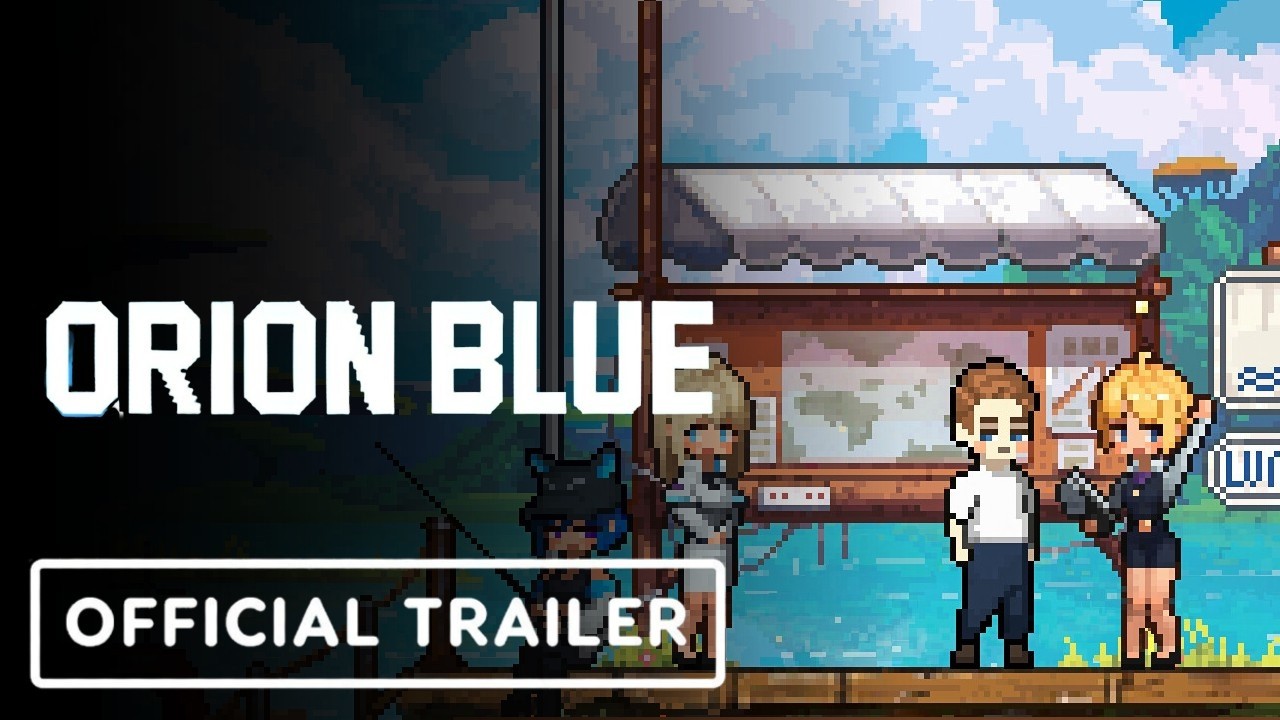
Orion Blue is a cozy fishing adventure set on an alien ocean world, and the Orion Blue color palette by region is what makes every screenshot feel like a moving postcard. Each fishing zone has its own dominant hue family, its own underwater tint, and its own ambient fish spawn zones that respond to the palette in different ways. This guide maps the palette across the five confirmed regions so you know exactly which coast glows teal, which vent runs violet, and which cave hides the rarest silhouettes. own ambient fish spawn zones that respond to the palette in different ways, and the northern Glacial Lagoon stands out as a particularly moody extension of that spectrum, so this guide maps the palette across the five confirmed regions to make sure you know exactly which coast glows teal, which vent runs violet, and which cave hides the rarest silhouettes.
The Five Region Palettes at a Glance
Before diving into individual areas, it helps to see the full Orion Blue color palette by region side by side. The table below condenses the dominant sky tint, water tint, and signature accent for every region mentioned on the Orion Blue Steam store page. The progression follows a roughly clockwise journey around the planet, so you can plan a single trip route that catches every palette in one outing.
| Region | Above-Water Sky | Underwater Tint | Signature Accent | Unlock Stage |
|---|---|---|---|---|
| Beachcombe Bay | Soft peach + cream | Pale turquoise | Warm sand beige | Tutorial / early game |
| Coral Gardens | Lavender dawn | Rose-tinged cyan | Magenta coral blooms | Early mid game |
| Hydrothermal Vents | Volcanic amber | Deep teal | Bioluminescent violet | Mid game |
| Starlit Shallows | Indigo + silver | Midnight blue | Glowing plankton cyan | Late mid game |
| Glacial Lagoon | Glacier white + ice blue | Frosted steel | Aurora green ribbons | Late game |
The five palettes share a unified pastel base, but each pushes one hue family to the foreground, which is why a simple palette swap in the in-game photo editor can mimic any region you have not visited yet.
How the Palette Affects Ambient Fish
According to community data shared by early playtest builds, ambient fish spawn zones are tightly bound to the local palette. Schools of Peach Sardine only drift into Beachcombe Bay because their scales match the warm sand tint, while Magenta Darters in Coral Gardens school in the rose-tinged water because predators cannot easily pick them out. When you move into Hydrothermal Vents, the ambient layer swaps to Violet Smelt, which blend into the bioluminescent plume. If you are hunting a specific species for a quest, learning the local palette gives you a free second filter on top of the fish log.
Beachcombe Bay: The Warm Welcome Palette
Beachcombe Bay is the opening region, and its palette is deliberately gentle so new players feel invited rather than overwhelmed. The above-water sky drifts between soft peach and cream, and the water reflects that warmth with a pale turquoise tint. The sandy shore is the dominant feature, and the sand color stays a consistent beige even at sunset because the developer wanted the early-game photo mode to feel forgiving.
| Element | Beachcombe Bay default | Beachcombe Bay at sunset | Photography impact |
|---|---|---|---|
| Sky band | Soft peach | Deeper apricot | First region photo mode foreground stays readable; ideal for early-game portrait shots of starter fish |
| Water tint | Pale turquoise | Warm cyan-orange blend | Reflection banding aligns with sky for cohesive composition; no harsh contrast against the beige shore |
| Sand color | Consistent beige (unchanged) | Consistent beige (unchanged by design) | Late-day sessions retain forgiving exposure, allowing new players to complete early photo challenges without filter unlocks |
| Daypart shift frequency | Gradual, every ~10 in-game minutes | N/A (terminal state of cycle) | Predictable rhythm lets players plan cast-and-shoot timing without consulting the clock UI |
| Recommended gear tier | Tier 0 (starter rod, no charm) | Tier 0 sufficient | No equipment gating in the opening region, matching the warm-welcome palette design intent |
Cave Fish Areas Around the South Jetty
There is a small sea cave tucked into the south jetty that most new players walk past. The cave fish areas inside shift the palette toward muted ochre and dusty teal, because the warm peach light from the bay cannot fully penetrate the rock mouth. Three ambient species — Ochre Goby, Dusty Tang, and Beachcomb Eel — spawn exclusively in that cave band, and they only appear during the 30-minute window when the sun is between 10° and 30° above the horizon. If you want a calm Orion Blue scenic spots screenshot with one or two of those fish silhouetted, position your camera at the cave entrance and wait for a school to drift in.
Diving Locations on the Near-Shore Shelf
The near-shore shelf in Beachcombe Bay is the safest place to practice diving because the underwater tint is shallow enough that you can still see the surface ripples. The two confirmed diving locations — Sunken Pier Base and Pale Reef Pocket — both sit in roughly 8 to 12 meters of virtual water. The palette here is the same pale turquoise as the surface, but with a 15% desaturation shift because the game engine adds a mild blue cast to all submerged geometry. Players who screenshot from below the surface often crop out the surface line entirely to sell the deep-tint look.
Coral Gardens: The Magenta Twilight Palette
Coral Gardens is where the Orion Blue color palette by region starts to push into more saturated territory. The above-water sky is a lavender dawn even at midday, because the planet's twin moon creates a permanent soft glow. The water underneath takes on a rose-tinged cyan tone that photographers love, and the magenta coral formations along the eastern ridge add a third hue to the composition.
Ambient Fish Spawn Zones in the Eastern Lagoon
The eastern lagoon is the densest ambient fish spawn zone in Coral Gardens. Magenta Darters, Rosefin Wrasse, and the rare Twilight Flasher all school in the same band, roughly 15 to 25 meters offshore. The palette of this band is a perfect gradient from lavender sky at the top of the frame to rose-tinged cyan at the bottom, which is why so many community-shared Orion Blue scenic spots screenshots come from this one spot. Plan to arrive at the lagoon around the in-game hour of 16:00, because the light angle is shallowest then and the magenta coral casts the longest reflections.
Above-Water vs Underwater Comparison
The above-water vs underwater contrast in Coral Gardens is the sharpest in the game. Above the surface, the lavender sky and the rose-tinged water create a warm-cool split that reads as peaceful. Below the surface, the same water loses 30% of its rose tint because the lavender light cannot penetrate, and the magenta coral takes over as the dominant hue. If you are building a side-by-side Orion Blue above water vs underwater comparison for a community album, Coral Gardens gives you the most dramatic single-region pair.
Hydrothermal Vents: The Volcanic Amber Palette
Hydrothermal Vents is the palette where the game's color theory gets serious. The above-water sky is a volcanic amber because of the sulfur haze, and the underwater tint shifts to a deep teal that looks almost black in the deep plume channels. The signature accent is bioluminescent violet that pulses along the vent walls and is the main reason this region has become the most-screenshotted location in early builds.
Cave Fish Areas Around the Vent Mouths
The cave fish areas around the vent mouths are the most challenging to navigate and the most rewarding to photograph. Three tunnels branch off from the central vent: Sulfur Pass, Obsidian Alcove, and Violet Channel. Each tunnel runs a slightly different palette because the bioluminescent violet hits different rock textures. Sulfur Pass reads as amber-violet, Obsidian Alcove reads as near-black with violet highlights, and Violet Channel is almost entirely violet. The ambient species — Sulfur Eel, Obsidian Bream, and Violet Smelt — each pick the tunnel whose palette best hides them, so if you are species-hunting you can predict which tunnel to enter by reading the hue.
Diving Locations Down the Plume
The two confirmed diving locations at Hydrothermal Vents are Plume Crown and Smolder Basin, and they sit at the bottom of the central vent shaft. The palette down there is almost the inverse of the surface: the volcanic amber above gives way to deep teal and violet, and your dive light becomes a thin cone of white that barely penetrates the gloom. Photographers who want an Orion Blue underwater areas hero shot should descend with their back to the plume, so the bioluminescent violet lights the subject from behind. According to community testing shared on early-access forums, the violet glow is brightest in the 90 seconds after a vent burst, so time your screenshot window carefully.
Starlit Shallows: The Indigo Midnight Palette
Starlit Shallows is the late mid game region, and the palette finally gives the planet a true night identity. The above-water sky is indigo with silver highlights from the planet's rings, and the underwater tint is a flat midnight blue that swallows almost all surface light. The signature accent is the glowing plankton cyan that drifts in slow clouds along the shore and the cave mouths.
Ambient Fish Spawn Zones Along the Tide Line
The ambient fish spawn zones along the tide line in Starlit Shallows are visually the most striking in the game. Plankton Manta, Cyan Tetra, and the elusive Indigo Lanternfish all drift in the same tide band, and they each emit a soft glow that matches the local palette. Plankton Manta glow pale silver, Cyan Tetra glow true cyan, and Indigo Lanternfish glow violet-tinged blue. The result is a moving constellation right at the waterline, and it is the single most common subject in any community Orion Blue scenic spots screenshot thread.
Cave Fish Areas Beneath the Ring Arches
Beneath the three natural ring arches along the western shore are the deepest cave fish areas in Starlit Shallows. The palette inside the arches is even darker than the open water, and the only light source is the Indigo Lanternfish themselves. The cave holds one ambient species — Ring Crab — that only spawns when the ring shadow covers the cave mouth. The shadow moves on a roughly 40-minute cycle, so you will need to plan your visit carefully if you want a clean screenshot.
Glacial Lagoon: The Frost Aurora Palette
Glacial Lagoon is the late-game region and arguably the most painterly palette in the game. The above-water sky is glacier white with ice blue gradients, and the water takes on a frosted steel tint that reflects the sky so cleanly that the surface looks almost like glass. The signature accent is the aurora green ribbons that arc across the sky at night, which the water mirrors almost perfectly.
Diving Locations Under the Ice Plates
The two confirmed diving locations — Frost Arch and Mirror Shelf — sit under thin ice plates that filter the surface light into a milky white. Below the plates, the palette shifts from frosted steel to a colder, almost silver tint, and the ambient species — Glacier Cod, Aurora Smelt, and Frost Eel — drift in slow loops because the cold water slows their animation rate. The Mirror Shelf is the better choice for an Orion Blue underwater areas screenshot because the ice plate above acts as a natural softbox, while the Frost Arch is better for action shots because of the stronger currents.
Above Water vs Underwater Composition Tips
The above water vs underwater difference in Glacial Lagoon is the subtlest in the game, which makes it the most demanding region for side-by-side compositions. Above the surface, the glacier white sky and frosted steel water create a near-monochrome image broken only by the aurora green ribbons. Below the surface, the same palette loses 10% to 15% of its brightness because of the ice filter, and the aurora green becomes a faint mint highlight on the water surface above. To sell the difference, community photographers recommend a vertical split composition that places the aurora arc in the upper half and the aurora mint highlight in the lower half.
Planning a Single-Trip Palette Route
If you only have one play session to cover every major hue in the Orion Blue color palette by region, the route below links all five regions in a clockwise loop. The plan assumes you have unlocked Glacial Lagoon and have roughly three in-game hours of daylight to work with.
| Stop | Region | Time of Day | Target Shot |
|---|---|---|---|
| 1 | Beachcombe Bay | 08:00–09:00 | Cave fish silhouettes in soft peach light |
| 2 | Coral Gardens | 10:00–11:00 | Rose-tinged cyan ambient school at the eastern lagoon |
| 3 | Hydrothermal Vents | 12:00–13:00 | Bioluminescent violet plume burst |
| 4 | Starlit Shallows | 20:00–21:00 | Indigo tide line with plankton manta constellation |
| 5 | Glacial Lagoon | 22:00–23:00 | Aurora green ribbons mirrored on frosted steel |
Because each region reads best at a specific light angle, the in-game clock matters as much as the geography. Community data suggests the route above produces the cleanest palette separation, because no two stops share a dominant hue.
Frequently Asked Questions
Which region has the strongest above water vs underwater contrast?
Coral Gardens has the strongest above water vs underwater contrast because the lavender sky light cannot penetrate the rose-tinged cyan water, so the palette shifts dramatically between surface and depth. Hydrothermal Vents is a close second, but the shift is driven by darkness rather than hue change.
Where are the best cave fish areas for screenshots?
The two most photogenic cave fish areas are the south jetty cave in Beachcombe Bay for its ochre-teal palette, and the Violet Channel tunnel in Hydrothermal Vents for its bioluminescent violet glow. Both caves also host ambient species that only appear under specific light conditions, which adds life to the shot.
Do ambient fish spawn zones change with the palette?
Yes, ambient fish spawn zones are tightly bound to the local palette because each species evolved a color that hides it from predators. If you change your lure tint through the in-game photo editor, certain species become easier or harder to spot in their home region, so a palette-aware approach is the fastest way to fill the fish log.
What is the safest place to practice diving?
The near-shore shelf in Beachcombe Bay is the safest place to practice diving because the water is shallow and the pale turquoise tint keeps the visibility high. The two confirmed diving locations on that shelf — Sunken Pier Base and Pale Reef Pocket — both offer enough vertical space to practice the camera controls without losing orientation.
Can I get a clean palette screenshot without visiting every region?
Yes, the in-game photo editor includes a palette swap filter that mimics the dominant hue of any region you have unlocked, so you can fake a Glacial Lagoon aurora shot from a Beachcombe Bay base if you only need the color story. Photographers who want a fully authentic image, however, should still visit the region in person because the ambient particle effects and fish spawn patterns are unique to each palette.